
Cyber safety is increasingly topical, especially in Australia, with some recently proposed laws. In this post, I’ll chat with Australian author and cyber security professional Craig Ford about how his work in the space informs his writing.
Craig shares my passion for uplifting young people and believes in the power of a good story to encourage the next generation. He advocates for women to enter the cyber security profession and has used his books to further this cause.
I’ve had the delight of working with Craig as a developmental and copyeditor on three of his books, and I’m thrilled to feature him on the blog.
But first…
Who is Craig Ford?
Craig Ford has worked for 20+ years as a cyber security professional. At the time of writing, he has six published books: A Hacker I Am, Foresight, Shadow, Vulcan, and The Shadow World book series. He is a freelance cyber security journalist and has worked with publications including Ceo Magazine, Top Cyber News, Cyber Today, Cyber Australia, secureGOV, CSO Online, and is a regular columnist for the Women in Security magazine.
Craig confounded and is the director of Cyber Unicorns, a cyber security consultancy that is on a mission to educate everyday people with their online cyber education platform and mobile app that will be available by the end of 2024.

Hi Craig, thanks for joining me! Let’s talk about your books…
We’ve worked together on a few of your books (Foresight, Shadow, Vulcan), but for readers who might be unfamiliar with your work, can you tell us a bit about each one?
Foresight is my first novel, it is a cyberpunk or hacker fantasy novel that puts you in the mind of a teenage female hacker Sam (Samantha). It’s a fun, fast-paced, cyber-thriller that really gives you a view into the world of a hacker: what she thinks and feels… it’s hard to come back once you start to dive further into her world!
This book was written because I had been contributing to the Women in Security magazine for a while and as a man, a writer, in this space I wanted to help encourage more young women an interest in cyber or STEM in general. In Australia, we have around 17% female participation in the industry so I wanted to help change that in my way. The character of Sam was born and she has been very well received by young adult (and adult) readers.
Shadow is book two in the series that flips the reader into Shadow’s mind, the bad guy in this series. It takes you into a darker world of hacking, a true fast-paced cyber-thriller. It is based on my real-world experience in ethical hacking and security so it’s grounded in reality with some Hollywood flare thrown in to make it more fun.
Vulcan is book three in the series and brings you back into Sam’s mind, to take you even deeper into this truly amazing and sometimes a little scary reality of a hacker. In Vulcan we see a young women who is finding her way in this world and making some noise while she is doing it.
The Shadow World is my coauthored book I created with Caity Randall. It is a children’s (7-14) cyber education book that helps kids, and parents reading along with them, to stay safe in the digital world we all live. It tells stories, helping to give accessible content that provides real education and understanding to kids. I have helped donate over 6500 copies of this book to schools across Australia and will continue to get this book into as many children’s hands as I can. If The Shadow World can save one child from suicide or mental health issues, it was worth all the effort.
Your books discuss cyber security, and the Foresight series features a girl who becomes involved in the cyber security world – what drew you to writing about these topics?
Cyber security is what I do in my day job, I have a background in ethical hacking and security testing. Today I generally work as a senior cyber security consultant helping organisations uplift their maturity and protect themselves from the malicious hordes who would steal their data and then sell it back to them.
I love to share my knowledge and try to make it more accessible to everyone, not just us technical people. My first book, A Hacker I Am was born from this desire; as I was doing my first Masters degree, I hated how boring and hard to absorb cyber security books were, so I created one that was made up of stories and easier to understand very complex issues.
What do you hope readers take away from reading your work?
I believe there are two things: the first is a love of a new world. The hacker’s world, the digital world, is an amazing place. If I can encourage more people to love it as much as I do, while making the right choices with how they act, then that is perfect.
I also want to teach everyone how to be safer in this space, to see the risks but to learn how to navigate it just a little bit more safely each time. Especially with The Shadow World, our kids’ education book, it’s such an important skill for kids to learn now. It’s like learning to ride a bike or read a book, they need these skills to truly be safe and confident in this world we all live in. Our digital and physical lives are only going to merge more and more, so we need to prepare them.

You’ve written both young adult books and middle-grade books, so tell us a bit about your approach when writing stories that aim to engage younger readers?
I am a big believer in writing for your audience or communicating in the right way for your audience. It’s something I speak about with the talks I do at events as well. We need to find a story that truly connects with our audience. With my Foresight series, I created Sam, my lead female character. She is a fun and charismatic young woman who breaks down stereotypes; she has been written intentionally to remove the idea that hacking and cyber is a mans’ world.
In Shadow, I show you how circumstance and a dark beginning can send you down a path you never knew was possible, showing my young readers how dark it can get, but also are they really that different?
It’s about finding a way to connect and reflect the diverse world we live in. I have developed First Nations characters, young mum hackers, and gym fanatics all mixed into one plot that is fast-paced and I’m told very enthralling at times. I’ve been intentional about seeking out advice from people who are different to me when writing these characters.
In many ways, the cyber education book was the hardest to write for young children, this is primarily because of the subject matter. How do you talk about sextortion and cyber-stalking with 7-8 year olds? It is not simple. We needed to create age-appropriate stories that they could relate to, with the goal being to help them understand the at times confronting topic.
Tell us about your writing practice…
Do you have any authors that you look to for inspiration – who/why?
I love the Pittacus Lore series – I Am Number Four, by James Fray and Jobie Hughes. It’s the way I can imagine myself in their scenes and the way they still keep the story grounded in reality. It really works well.
Also the Inheritance series by Christopher Paolini.
I love all these writers. I haven’t written anything like them, but I love their style and how they pull me into their stories.
What does your writing rhythm look like?
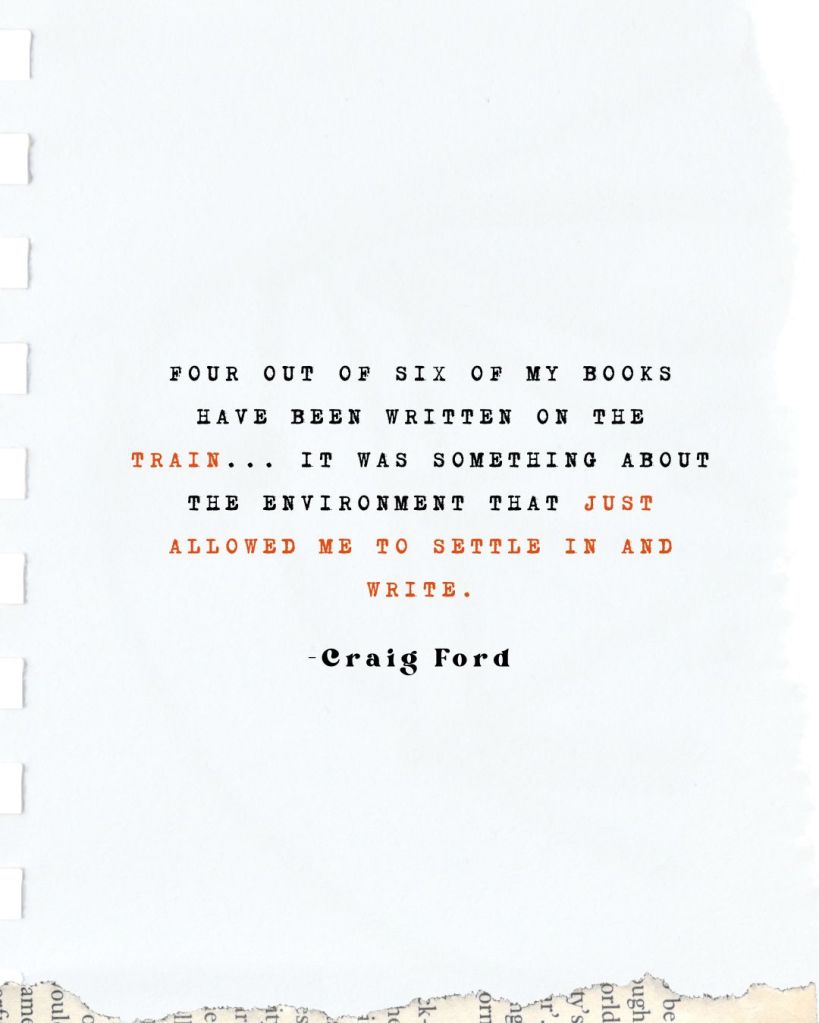
Four out of six of my books have been written on the train. I used to have a commute to the city a couple times a week, about an hour each way, which would allow me to write a chapter in a commute. It was something about the environment that just allowed me to settle in and write.
I wrote my books in around 3 months in this way, and I loved using what would otherwise be wasted time for something as great as a new book.
I don’t write as much these days with less commuting into the city each week but that is still the best place for me to write and create new stories.
Generally, the way I write is I map out roughly a paragraph for each of the first 20 chapters of my book; what I want to achieve and what’s going to happen. I then just write chapter by chapter following this rough path until I get to the end of the planned path and then I just follow the path of the story, let it twist as it feels like it needs to and just enjoy the process. It seems to work well for me.
If you could give any new writers any advice, what would it be?
I think the best advice is to find what makes you, you. Essentially, don’t try to write like anyone else. You can still love how I write but that doesn’t mean it’s what your style should be. Find your grove, find your style, and just go with it.
I write stories.
I educate by pulling you into the world I want to show you and let you leave with a memory of the adventure, but also the knowledge you didn’t notice you learned on the way.
What are your writing “essentials”?
I like either a quiet place to let my mind wander, or a constant background buzz of activity. Nothing connected to me or what I’m doing, just a rhythm of activity, like the train I mentioned above. If I can venture into my unfolding story, and allow it to take me deeper on that path, I just lose myself. It feels like I let the book almost write itself.
Getting lost in the writing experience and being absorbed, zoning out all that surrounds, can be bad sometimes… I have had some very close calls where I vaguely hear my train stop announcement and have had to pack up my laptop very quickly.
What has been your favourite part of the writing/publication journey so far and why?
I think my favourite part is the love I have found for writing and storytelling that I never imagined would be possible.
Growing up, I never considered anything like this. I wasn’t a massive reader. I preferred movies as a kid, not books.
I even had major struggles in early primary school learning to read, but now I have six published books. I love it and feel like I will always keep writing in some form now.
I don’t know where the journey will take me, but I love that it is now a big part of who I am.
Where can readers find out more about your work and writing?
The best spot to find out about my work or books is on my website https://cyberunicorns.com.au or my author site https://craigfordauthor.com and any of my socials will help you find out more about me and my books:
Linkedin: Craig Ford | LinkedIn
Instagram: Cyber Unicorns (@cyberunicorns.com.au) • Instagram photos and videos
Facebook: https://www.facebook.com/AHackerIam/
Thanks again, Craig, for coming on the blog and sharing about your writing process, and experience in cyber security.


 Steph Huddleston